By EPA

Families as Core Partners for Inclusive Education

Creating a fully functioning education system is not an easy task, but creating a fully functioning education system that truly includes all pupils and values their contribution is even harder. To work towards this goal, including families is essential. This was the theme at the heart of the last “Inclusion Talks” webinar, organised by the European Agency for Special Needs and Inclusive Education (EASNIE). EPA Project Coordinator Arja Krauchenberg was one of the two speakers at this event, bringing EPA’s perspective to the discussion, which was followed live by almost 150 participants and can be watched again on EASNIE’s YouTube channel.


Families as part of the solution

Elizabeth Gosme, speaking on behalf of COFACE Families Europe, highlighted the importance of looking beyond disability rights towards a broader vision of inclusive societies in which support systems for families are built so that they can participate fully. She stressed that schools can play an important role as hubs within a wider community ecosystem.

Consequently, this approach also entails the creation of meaningful spaces in which parents and teachers can collaborate and, most importantly, communicate. In particular, she lauded the role played by Family Support Desks, which are connected to schools and help increase families’ engagement with school life.

Parents can and should play an active role even outside pre-existing meeting spaces, though. In fact, Elizabeth listed several forms of “parent activism” that can help this purpose and go beyond participation in school activities. Most importantly, she emphasised the importance of parent networks and especially of joining advocacy campaigns for inclusive education.


Beyond the blue dots: what inclusion really means

Before even addressing the topic of family inclusion, Arja Krauchenberg started her speech by asking what inclusion is. If we turn to the dictionary definition, a glaring issue emerges. In fact, she explained, the dictionary definition focuses excessively on what is lacking, or, to use her words, the definition contains too many “dis-”: disadvantage, disability, etc. This prefix has inherently negative connotations, which makes us reflect on how important language is.
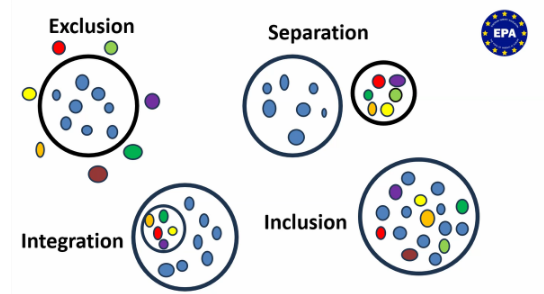
Building on this, Arja explained what inclusion should really mean and, by extension, what inclusive education should really look like. To be truly inclusive, education should consider all pupils equally, avoiding any type of marginalisation and cherishing the contributions of students from all backgrounds without any discrimination. This not only means children with special educational needs, but it also includes pupils who face language barriers or who are from migrant backgrounds. Exclusion, separation, and even integration are not compatible with true and meaningful inclusion, as shown in the graphic above.


The path to successful implementation

The aim should be to achieve what Arja referred to as “liberation”, but two different sets of conditions (defined as “outer” and “inner” conditions) are needed. Outer conditions cover the more practical aspects of the system, i.e., improving teacher training, obtaining better support systems for pupils with special needs, and building more adequate school buildings. By contrast, inner conditions include more cultural (thus less tangible on paper) changes such as emphasising the richness of diversity, getting away from the negative connotation of some terms, and proposing a whole-society approach with contributions from the whole community.
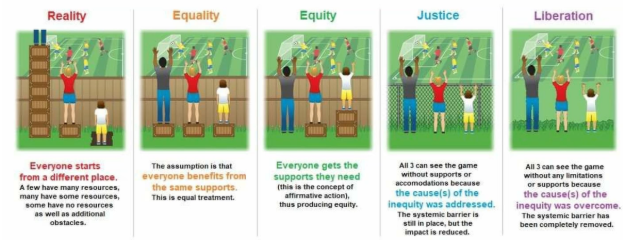
Admittedly, the legal framework is already strong in principle, given that European and international law recognise education as a right and contain important commitments towards inclusion and participation. Nevertheless, implementation often lags behind. This is why, according to Arja, a clear roadmap is needed. Implementation can be done in small and manageable steps, but everyone involved needs to be part of the process and have the resources they need to fulfil their role. In this context, resources are not just economic, but also time, people, spaces, and support. For this reason, an essential step is represented by building local learning ecosystems so the whole community is on board, as learning does not only take place in schools.


Some common themes

During the Q&A portion of the webinar, some questions were raised about some of parents’ most common fears. On the one hand, some parents are worried that inclusive education may slow down the learning process for other children, while, on the other hand, the families of kids with special educational needs are concerned about their children being bullied or excluded. In response, both speakers stressed the importance of communication and cooperation among all actors involved. With the assistance of school leadership, which has an important role to play in creating channels through which such concerns can be openly discussed, parents need to be treated as equal partners.

On the same note, other participants raised concerns that teachers may feel overwhelmed by what they perceive as parental intrusion. Both Elizabeth and Arja agreed that this issue is deeply connected to the previous questions and the themes that were discussed during the seminar, as the answer lies in giving educators both enough support to fulfil their roles and the proper channels to have a constructive dialogue with parents. When the necessary support is absent, it becomes more difficult for teachers to give enough attention to every learner, let alone to effectively take parents’ perspective into account.

The key takeaway from this webinar, as repeatedly stressed by both speakers, is that to reach the goal of truly inclusive education, the involvement of the whole community is required. Even though the legal groundwork, although imperfect, is already in place, proper implementation needs to be supported by parents, teachers, school leaders, and policymakers alike, thus creating a community that can truly foster an environment in which all pupils, regardless of their circumstances, can thrive.


AI usage note: AI was used to check spelling and grammar consistency. All written content is original and was produced by the authors.

By Boštjan Bobič

Conference: Bridging the Gap: VET, Green Skills, and the Family Learning Ecosystem | Conference

Shaping a Resilient and Attractive Vocational Future

Organized in Brussels by the European Parents’ Association (EPA) in official partnership with the European Economic and Social Committee (EESC) in the framework of the EU-co-funded ECOFamilies Project 

👉 REGISTER HERE

📄 DOWNLOAD THE FULL AGENDA (PDF)

Why Attend?

The European green transition is not merely a technical challenge – it is a cultural and social transformation that begins in the home. While EU policy frequently focuses on industry output, parental perceptions remain one of the single strongest influences on career choices and Vocational Education and Training (VET) participation.

Building on the results of the Erasmus+ ECO-FAMILIES Project, this high-level conference breaks institutional silos by bringing together top EU decision-makers, leading European VET networks, civil society leaders, and parental representatives. Moving beyond standard project reviews, the event builds directly on recent EESC Opinions to operationalize green skills, and address the “parental perception gap”.

Event Snapshot

📅 Date: 8 September 2026

🕒 Time: 14:00 (in-person registration at 13:30) – 17:30 CEST (followed by a Reception)

📍 Venue: European Economic and Social Committee (EESC), VMA building, Rue Van Maerlant 2, Brussels, Room VMA 22 (Live online streaming available)

🤝 In-Person Exclusive: Interactive tool display and official Policy Networking Reception starting at 17:30 CEST

Key Highlights & Program

📄 DOWNLOAD THE FULL AGENDA & PROGRAM HERE (PDF)

  • Opening & Keynote: Insights from EESC Rapporteur Nicoletta Merlo, Melina Tasiovasilis (Directorate-General for Employment, Social Affairs & Inclusion; Unit B3 – Vocational Education and Training, Skills Portability, CEDEFOP), and Event Patron Dr. Renate Heinisch.

  • The ECOFamilies Model: Practical tools, AI-powered learning app, and grassroots data from the ECO-FAMILIES Project demonstrating how multigenerational learning boosts green skill adoption.

  • Panel 1 — The Institutional Pulse: Matching training to labor market demand with leaders from Cedefop, EVTA, and LLLP.

  • Panel 2 — Grassroots Reality & VET Attractiveness: Tackling perception gaps directly with frontline perspectives from EfVET, EVBB, Youth representatives and EPA.

Institutional Leadership & Key Contributions

This conference brings together top decision-makers, European networks, and civil society leaders to drive the dialogue on green skills and VET attractiveness:

Nicoletta Merlo | EESC Member & Rapporteur

Rapporteur for the landmark EESC Opinion “How to ensure green skills and promote green vocational institutions” (SOC/833-EESC-2025). Nicoletta leads the call for systemic, inclusive educational models that align green skills with European labor market realities.


Melina Tasiovasilis | Directorate-General for Employment, Social Affairs and Inclusion (DG EMPL), European Commission

Delivering the High-Level Keynote on behalf of DG EMPL, bringing institutional insight into how EU employment policies and skill agendas align with grassroots execution.


Jasper van Loo | Department Coordinator for VET and Skills, Cedefop

Leading Cedefop’s work on skills intelligence and labor market analysis, providing crucial evidence-based insights on green skill trends, labor market transition, and future vocational training needs across Europe.

Renate Heinisch | ESMH scientist

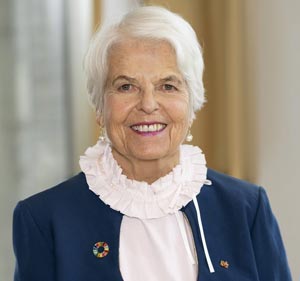
Dr. Renate Heinisch | Patron of the Event, EPA Honorary Member & Former EESC/MEP Member

Holder of the Bundesverdienstkreuz, Dr. Heinisch brings decades of European parliamentary and institutional experience, advocating for intergenerational learning and family involvement in education policy.

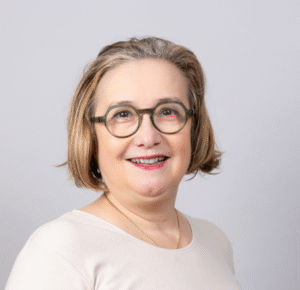
Virginie Durin | Vice-President, European Parents’ Association (EPA), President of APEL National, France

Championing the family learning ecosystem, Virginie represents the parental voice across Europe, ensuring households are recognized as active partners in the green transition.

Featuring Expert Contributions & Panel Voices From:

  • European Commission (DG EMPL): Delivering a high-level keynote on EU employment policy, skills agendas, and regional execution.

  • European Vocational Training Association (EVTA): Operational perspectives on quality development, work-based learning, and internationalization across European VET providers.

  • Lifelong Learning Platform (LLLP): Advocating for holistic education, active citizenship, and lifelong learning across civil society.

  • European Forum of Technical and Vocational Education and Training (EfVET): Direct insights and frontline experience from technical and vocational education practitioners across Europe.

  • European Association of Institutes for Vocational Training (EVBB): Best practices on modernizing VET institutes and addressing skills mismatches on the ground.

  • Organising Bureau of European School Student Unions (OBESSU): Bringing the critical perspective of European school students and VET learners to the policy table.

Register Now

To ensure active dialogue and exchange, in-person attendance is strongly encouraged. Join us at the EESC in Brussels to engage directly with policymakers, experience the interactive tool displays, and join the closing Policy Networking Reception.

Due to EESC security protocols, prior registration for in-person attendance is required.

👉 REGISTER FOR THE CONFERENCE HERE

(In-person seats are limited. Can’t join us in Brussels? The registration form also allows you to sign up for online hybrid access.)

Conference Background & Policy Context

Addressing three critical policy gaps identified across EU decision-making:

  • Bridging Institutional & Sectoral Silos: Education, labor market policy, and civil society often operate independently. This initiative brings VET providers (EVBB, EfVET, EVTA), Cedefop, and educational stakeholders directly into dialogue with civil society and the family ecosystem (EPA) to turn high-level European policies into field-tested solutions.

  • Closing the “Parental Perception Gap”: Parental guidance is a key driver of youth educational trajectories. To reach net-zero economic targets, VET must become a “first choice” career path. Modernizing VET requires an inclusive, multigenerational lifelong learning approach that prepares whole communities for the green economy.

  • Operationalizing EESC Recommendations: The conference acts as a direct delivery mechanism for key findings outlined in EESC Opinion SOC/833 (“How to ensure green skills and promote green vocational institutions”). By launching an Actionable Policy Blueprint for 2030, the event translates institutional policy advice into practical recommendations for EU Member States, VET centers, and civil society networks through 2030

About the ECO-FAMILIES Project

Parents are the ultimate role models for their children, playing a crucial role in fostering positive relationships with the environment and building an eco-minded generation. Facing challenges such as high household carbon footprints, food waste, and rapid climate change, the Erasmus+ ECO-FAMILIES Project was created to empower parents and adult educators with practical, accessible tools for sustainable eco-living practices.

Aligning directly with the EU Green Deal, the EU Climate Pact, the GreenComp framework, and the New European Bauhaus, the project turns European green goals into a cultural, human-centered, and tangible reality in everyday family life.
Core Aims & Objectives:

  • Empowering Adult Educators: Upgrading educator profiles under the GreenComp framework so they can deliver high-quality lifelong learning on green and sustainable competencies to parents.

  • Upskilling Parents for Eco-Living: Providing parents with accessible learning opportunities to adopt eco-friendly lifestyles that positively impact their households, children, and broader communities.

  • Digital Innovation & AI: Enhancing adult learning through engaging, innovative digital resources—including an AI-powered mobile app designed to overcome time constraints and resource barriers.

  • Building Dynamic Community Networks: Fostering local, national, and transnational networks to share best practices, co-design solutions for global green challenges, and create peer-to-peer communication channels for parents.

Funded by the European Union. Views and opinions expressed are however those of the author(s) only and do not necessarily reflect those of the European Union or the European Education and Culture Executive Agency (EACEA).

📄 DOWNLOAD THE FULL AGENDA & PROGRAM HERE (PDF)

👉 REGISTER FOR THE CONFERENCE HERE

By EPA

The NextGen Parenting podcast playlist

The NextGen Parenting podcast playlist is now available on YouTube. The series brings together expert conversations on digital parenting, digital safety, media literacy, online behaviour, cyber violence, gender stereotypes and positive support for young people. The playlist is intended for parents, adult educators, teachers, counsellors and professionals working with families and young people.

Explore the full NextGen Parenting podcast playlist and discover expert conversations from across the partnership: https://tinyurl.com/NextGenPodcasts

By EPA

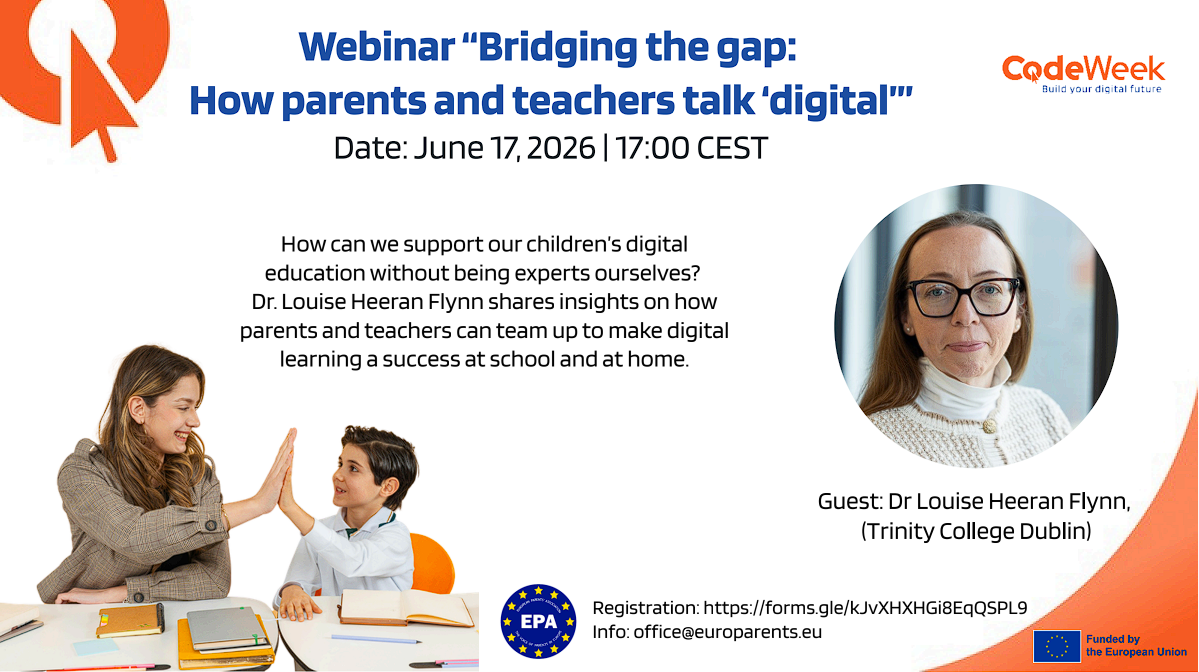
Upcoming Webinar: Bridging the Gap – How Parents and Teachers Talk “Digital”

We are excited to invite you to our upcoming webinar in the Code4Europe webinar series.

As technology increasingly shapes our children’s futures, many of us are left wondering: How can we support our children’s digital education without being experts ourselves? And how can we make sure the educational and the home environment are on the same page and don’t tug in different directions? 

To answer this question, we are thrilled to welcome our special guest speaker, Dr. Louise Heeran Flynn from Trinity College Dublin. Drawing from her extensive expertise, Dr. Heeran Flynn will share invaluable insights on how parents and teachers can team up effectively to make digital learning a success both at school and at home.

This event is part of the CodeWeek initiative, dedicated to helping families and educators build a stronger digital future together.

📅 Event Details:

  • Date: June 17, 2026

  • Time: 17:00 CEST

  • Location: Online

  • Cost: Free (Registration required)

  • Funding: Funded by the European Union

📝 How to Join:

Please share this event widely with your networks, schools, and parent communities!

👉 Click here to register and secure your spot

By EPA

A New Chapter for EPA: Strengthening the Voice of Parents Across Europe

We are thrilled to share some momentous news that marks a historic turning point for our association. As we move into 2026, the European Parents’ Association has officially entered into a Strategic Grant Agreement (SGA) with the European Commission under the Erasmus+ program.

This partnership is a profound recognition of a truth we have championed for years: parents are vital partners in shaping the European Education Area.

"For EPA, this is more than just funding; it is a commitment to growth, professionalization, and deep-rooted inclusion." 

What This Means for Families and Communities

With the launch of our new project EURO-PARENTS, we are scaling up our operations to ensure that grassroots family experiences directly inform EU policy. Over the next two years, you will see EPA transforming its capabilities:

  • Expanding our reach: We are actively reaching out to underrepresented regions and minority groups across Europe.
  • Accessibility & multilingualism: We believe language should never be a barrier to advocacy. Our website and core toolkits will therefore be available in at least 4 European languages plus Simple English.
  • Equipping parents for the future: We are delivering concrete resources on the issues that matter most to modern households - from digital literacy and AI in education to youth mental health, vocational training and education, and green skills.
  • Collecting good practices: We are launching an online EPA Knowledge Base to powerfully bring our members’ proven success stories and good practices out into the world, so that others do not have to reinvent the wheel.
  • Training more parents: We are stepping up our training delivered to members and grass-roots communities. 

Building a More Family-Friendly Europe

Our goal is simple: to cultivate a stronger, more inclusive EPA that provides invaluable resources to national communities and projects a proud, unified voice in Brussels.

Whether you are a parent looking for guidance, a national organization looking to collaborate, or an ally in education, you are part of this journey. Together, we are co-creating the future of European education. 

🔍 Explore the Full Strategy

Want to see the specific pillars, measurable targets, and formal governance structures driving this initiative?