ALCUIN AWARD 2025 Jury Members
Chair of Alcuin jury
Boštjan Bobič

Jury Member
Chantel FOUCHE
ADHD Europe
RPM 0810.982.059
Rue Washington 40,
B-1050 Brussels, Belgium
www.adhd-women.eu
www.adhdeurope.eu
 Chantel Fouche has ADHD and is a mother/carer of an adult son who lives with ADHD (diagnosed at age 7) as well as having a young toddler. Served on the board of Neurodiversity Belgium and at European level with ADHD Europe (2018-2024). Now recently elected on the board of EFNA . Her passion lies in – supporting people living with various brain health conditions, disabilities & ADHD. Being the patient’s voice to reduce the stigma and discrimination that exists today. To create & sustain networks to raise more awareness around the globe. Communicating evidence-based information from collaboration on research consortium projects. Attending high-level meetings with European stakeholders to engage in fruitful conversations. Advocating for the work that needs to be done with the aim of a better quality of life for people. Mobilising countries with best practices for better access to diagnosis/treatment of ADHD.
Jury Member
 Francesca Osima has extensive experience in the development and management of projects within the education, youth, and media sectors, with a particular focus on democratic student participation, media literacy, and citizenship education. Since joining OBESSU in September 2023 as Head of Projects, Francesca has been leading the project team, overseeing the implementation of ongoing initiatives, managing donor relations, and coordinating proposal development. In line with OBESSU’s mission to represent secondary school students across Europe, Francesca firmly believes in the power and agency of students to drive the educational reforms our societies need.
Jury Member
Dr Rory Mc Daid (sé/é)
Dr Rory Mc Daid (he/him)
Stiúrthóir Taighde
Director of Research
Stiúrthóir, Tionscadal na Múinteoirí Imirceacha
Director, Migrant Teacher Project
Ceannaire Cúrsa, MES Foghlaim Idirchultúrtha agus Ceannaireacht
Course Leader, MES Intercultural Learning and Leadership
rory.mcdaid@mie.ie
Tel: +353 1 805 7708
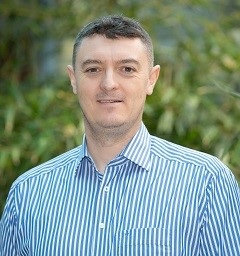 Dr Rory Mc Daid is Chair of the Board of the SIRIUS Network, the European policy network on migrant education, which brings together researchers, policymakers and practitioners to strengthen inclusive education systems across Europe. Based at Marino Institute of Education, Dublin, where he lectures in education, Dr Mc Daid’s work focuses on migration, inclusion and the intersections between schools, families and communities. He has led research projects examining how education systems respond to diversity, with a particular emphasis on the role of schools in fostering equitable relationships with families, highlighting how collaborative approaches between home and school can support children’s learning and wellbeing.
CRA: 20054786 CHY: 15693
Heinz, M., Mc Daid, R., & Keane, E. (2025). The essential role of teacher diversity in creating equitable and inclusive learning environments: an interdisciplinary conceptual framework. Learning Environ Res
Mc Daid, R. (2025). Integration of Ukrainian refugee teachers in Ireland? Intercultural Education, 36(2), 182-201.
Fitzsimmons, P., Mc Daid, R. & Share, M. (2025). Standardised testing among children learning English as an Additional Language (EAL) in Ireland: Normative and exclusionary practices. REACH 37(1).
Keane, E., Heinz., & Mc Daid, R. (Eds.). (2023). Diversifying the teaching profession: Dimensions, dilemmas and directions for the future. United Kingdom: Routledge.
Till 3rd of October, two projects applied for ALCUIN Award 2025:
Igniting Critical Thinking: The Next Generation Learning Platform (Lithuanian Parents’ Association)
The Challenge: In an era of rapid technological change and information overload, critical thinking isn’t just a desirable trait—it’s a crucial survival skill. The World Economic Forum’s Future of Jobs Survey (2020) places it among the top five essential skills for 2025. Yet, current educational tools and methodologies often fall short, failing to provide teachers with the systematic, data-driven approach needed to effectively cultivate this vital ability in students. Preparing future-ready individuals must start in the classroom, but educators are currently under-equipped.
Our Solution: The Critical Thinking Development Platform We are developing an innovative, adaptive, and data-driven platform designed to revolutionize how critical thinking is taught and learned in general education settings. This isn’t just another exercise book; it’s a dynamic system built for maximum efficiency and impact.
Key Impacts & Features:
• Systematic Skill Building: Our platform moves beyond sporadic instruction, providing a structured, systematic pathway for students to develop and hone core critical thinking skills.
• Data-Driven Mastery: It is built on a robust data infrastructure, offering unprecedented insights into student thought processes. This allows teachers to precisely pinpoint where students struggle and tailor interventions for maximum effectiveness.
• Empowering Meta-Reflection: A unique feature of the platform is its dedicated focus on meta-reflection and personalized feedback. Students don’t just solve problems; they analyze how they solved them, cementing the underlying thinking patterns.
• Adaptable & Customizable: Designed to seamlessly integrate into any curriculum, the platform is fully customizable, making it an invaluable, flexible tool for educators globally who are committed to enhancing their students’ problem-solving and decision-making capabilities.
This project represents a unique, high-impact contribution to the future of education. By providing teachers with a powerful, modern, and engaging tool, we will directly improve student outcomes, ensuring that the next generation is equipped with the critical thinking skills necessary for personal growth, professional success, and navigating complex global challenges. Investing in this platform is investing in the intellectual capital of the future workforce.
PartEl – Partizipation von Eltern aus Drittstaaten an Elterngremien (Participation of parents from third countries in parent committees) (bbt).
The PartEl project, funded by the Asylum, Migration and Integration Fund (AMIF) and co-financed by the Federal Office for Migration and Refugees in Germany (BAMF), aims to inform parents from third countries about playing a more active role in parent committees in their children’s kindergartens and schools, and to encourage and empower them to run for elections. The project started on 1 February 2023 and will end on 31 January 2026. Children in the German education system can only succeed if their parents are able to support them. Many parents from third countries were educated in other countries and feel uncertain about the German education system. They are usually unaware of the expectations placed on them and of their duties and rights. Parents may also struggle with language barriers, institutional discrimination and everyday racism. Limited family resources and the challenges of settling down in a new country, finding a job and a place to live can be a reason why work in parents’ committees is not always a priority. However, children and young people are more successful in their educational careers when their parents actively participate in and help shape the work of educational institutions. Parental participation is therefore not only a cornerstone of educational cooperation, but also an important tool for developing inclusive and competent educational institutions. PartEl is implemented at the bbt main office in Berlin and in five regional offices. The regional offices are organised by bbt members. The main office provides cooperation partners with a professional and content-related framework for regional work. At the federal level, we are committed to increasing the representation of parents from third countries in parent committees and promoting networking. Existing parent representative committees at all levels (school, daycare centre, city/district, federal state, federal government) are approached and empowered to open up to parents from third countries in the future and to take measures that pave the way for them to join committees. The cooperation model between federal and regional offices is implemented as follows: Awareness of the issue will be raised at federal level on the basis of a framework concept and public relations work, including the organisation of a conference, implemented by the main office. At the same time, local migrant organisations that work with parents on the ground will be informed, activated and strengthened by multiplier training courses, events and networking at regional level through the regional offices.
Decision
Both projects demonstrate innovative elements and present clear, well-structured plans for involving parents, showing strong potential for scalability and long-term impact. However, the PartEl project (Participation of parents from third countries in parent committees) stands out for its direct engagement approach: it targets parents not only as supporting actors, but as the primary beneficiaries of its actions. This direct strategy of empowerment and participation is likely to generate meaningful and sustainable outcomes, particularly given the well-documented evidence that active parental involvement in schools contributes to improved student performance and increases the likelihood that students themselves take on representative or leadership roles. For this reason, the jury believes that the Alcuin Award should be granted to the PartEl project.